
 info@gbtest.cn


 en
en ru
ru es
es ar
ar



From Waste Management to Lifecycle Engineering
The EU's revised Packaging and Packaging Waste Regulation (PPWR) is arguably the most consequential piece of packaging legislation to take effect in over a decade.
Unlike its predecessor directive, which primarily addressed how packaging waste is collected and disposed of at the end of its life, the PPWR regulates the entire lifecycle of packaging — from raw material selection and product design, through recycled content and biodegradability, to final disposal. For manufacturers, converters, and brand owners who export to or operate within the EU, this is no longer a back‑office recycling issue. It is now a front‑line design, R&D, and quality‑control requirement that touches every layer of the packaging supply chain.
For GBPI, an instrument manufacturer built around barrier testing, physical property testing, and thermal / degradation analysis, this regulatory shift is not simply a compliance burden passed down to customers — it is a substantial commercial opportunity. Every clause of the PPWR that tightens a material specification creates a corresponding measurement problem, and measurement problems are what GBPI's product lines are built to solve.
Compostable Packaging Mandates & Biodegradation Testing
Article 9 requires that certain defined packaging formats — tea bags, sticky produce labels, very lightweight plastic carrier bags — must be compostable under industrial composting conditions, meeting the EN 13432 standard (harmonized with ISO 14855).
To claim conformity and obtain third‑party certification such as TÜV Austria "OK Compost" or DIN CERTCO, manufacturers need quantifiable data on disintegration rate, biodegradation percentage, and ecotoxicity of the resulting compost.
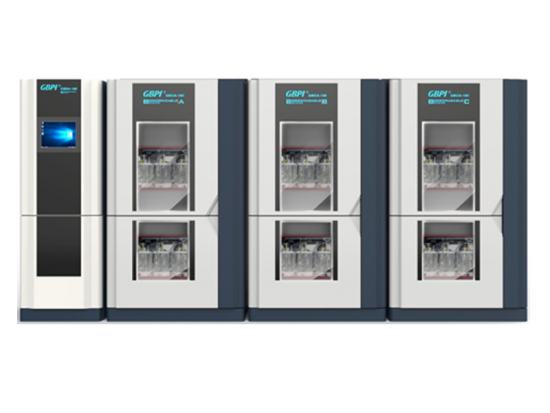
This is where GBPI's Biodegradability Testing line, and specifically the GBDA‑180 Intelligent Compost Degradation Tester, becomes directly relevant. The instrument simulates controlled industrial composting conditions and tracks CO₂ evolution and mass loss over time — exactly the data set EN 13432 / ISO 14855 certification requires. As PLA, PBAT, PHA, and starch‑blend material producers scale up to meet EU compostability mandates, this becomes a routine batch‑release tool, not a one‑time purchase.
Material Purity & Thermal Analysis
To make packaging easier to recycle, the PPWR pushes strongly toward mono‑material design and restricts additive combinations that complicate sorting.
In practice, converters need to verify polymer identity, detect cross‑contamination between resin types, and characterize how much recycled content or filler is present in a batch. This is squarely the domain of thermal analysis.
Differential Scanning Calorimetry (DSC) measures melting and crystallization behavior, distinguishing polymer types and estimating crystallinity — useful for confirming mono‑material purity and detecting PCR blending irregularities. Thermogravimetric Analysis (TGA), part of GBPI's broader Thermal Testing Equipment category, complements this by measuring decomposition temperature and quantifying filler, carbon black, or organic content through controlled mass‑loss profiling.
As documentation pressure grows, thermal analysis shifts from a specialty R&D tool into a routine compliance and quality‑assurance asset.
Mandatory Recycled Content & the Barrier Trade‑Off
Article 6 sets escalating minimum recycled‑content thresholds for plastic packaging, phasing in from 2030 onward. Incorporating PCR resin is not a drop‑in substitution.
Recycled content typically introduces micro‑contamination, pinholes, and molecular chain degradation that measurably reduce barrier performance and mechanical strength compared to virgin resin — which is exactly where GBPI's core barrier‑testing families come into play.
| # | PPWR Requirement | Converter Challenge | GBPI Instrument |
|---|---|---|---|
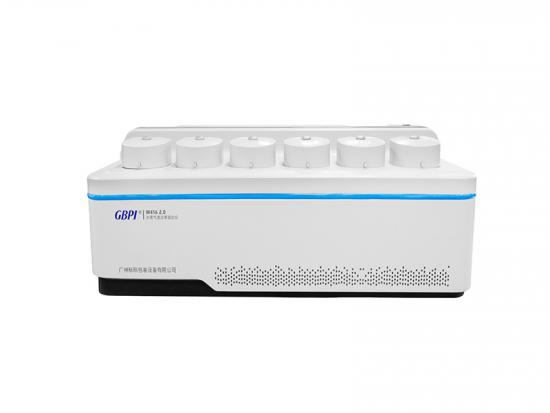
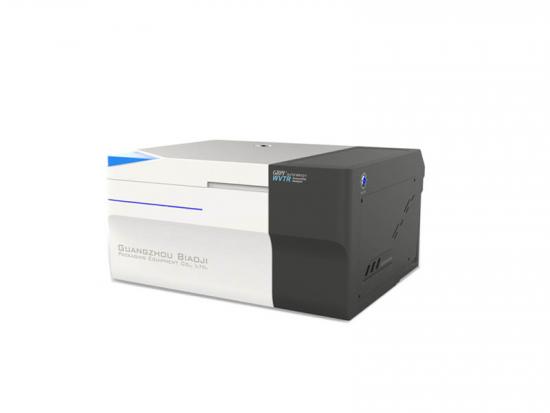
| 1 | PCR content mandates (Art. 6) | Water vapor barrier degradation after PCR blending | Water Vapor Permeability Analyzer / W203 2.0 |
| 2 | PCR content mandates (Art. 6) | Oxygen ingress after adding recycled resin | Oxygen Permeability Analyzer / Y310 2.0 |
| 3 | MAP / shelf‑life sensitive formats | CO₂ / N₂ transmission verification | Gas Permeability Analyzer / N500L |
| 4 | Seal & mechanical integrity with PCR blends | Seal strength, slip, and film‑handling changes | Tensile Tester, Laboratory Heat Sealer, Coefficient of Friction Tester |
Lightweighting & Structural Integrity
Article 9 also restricts unnecessary packaging volume and weight, driving converters toward aggressive film‑gauge reduction — lightweighting.
Thinner films are inherently more prone to pinholing, tearing, and impact failure, and any barrier compromise directly threatens shelf life. GBPI's physical‑testing portfolio addresses this trade‑off directly: the Falling Dart Impact Tester (including the GBD‑L2) quantifies the energy a thinned film absorbs before failure, while the Tear Tester (such as the GBD‑S Elmendorf tester) evaluates tear propagation resistance.
Combined with the Leakage Tester and the barrier analyzers above, converters can validate whether a lightweighted structure still delivers adequate physical protection and preserved shelf life — turning "how thin can we go" from a guess into a data‑driven decision.
Sell the Compliance Solution, Not Just the Instrument
Exporters facing EU market access are not shopping for isolated instruments — they are assembling a defensible compliance file, often needing to issue a Declaration of Conformity.
GBPI's existing Solutions section, including its dedicated Recyclable & Biodegradable Materials page, is a natural home for this kind of bundled, use‑case‑driven marketing.
Three customer segments deserve particular attention:
Bio‑resin Producers
PLA / PBAT / PHA compounders need degradation testers and DSC/TGA as recurring R&D and batch‑QC tools, not one‑off purchases.
Flexible‑Pack Exporters
Food & personal‑care converters need barrier and heat‑seal testers to prove PCR / lightweighted films still hold shelf life.
Labs & Universities
Third‑party certifiers and academic labs are scaling capacity for compostability and PCR testing — a durable equipment channel.
Conclusion
The PPWR converts what used to be a downstream disposal question into an upstream design and formulation constraint — and every constraint it introduces has a measurable, testable counterpart. GBPI's existing instrument portfolio, spanning barrier and permeation testing, physical property testing, thermal analysis, and biodegradability testing, already covers nearly the full technical footprint the regulation demands.
The task ahead is less about building new products and more about repackaging existing capability into a coherent compliance narrative — one that speaks directly to the deadlines, certifications, and technical documentation that EU‑facing packaging manufacturers will increasingly be required to produce.