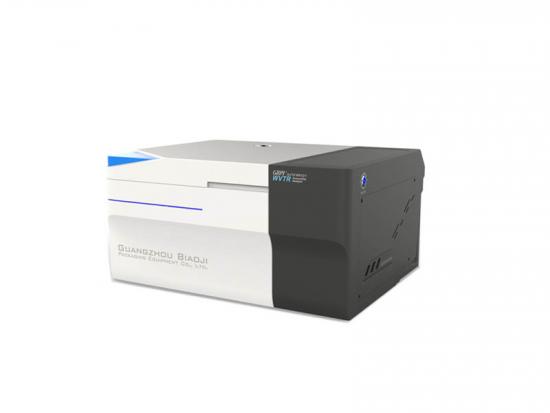
packaging testing equipment Water Vapor Permeation Tester
NEWS
  • GBR Hot Tack Tester: Measuring the Seal While It Is Still Hot
    GBR Hot Tack Tester: Measuring the Seal While It Is Still Hot 2026-11-18
        GBR Hot Tack Tester A seal is at its weakest in the second after it is made. The GBR seals a specimen and peels it while the seal is still hot — the same window a bagging line loads a pouch in — so the number you record reflects the filling machine, not a cooled sample tested hours later. 250 °C max sealing temperature 0–100 N peel force measuring range 0.1–0.8 MPa adjustable sealing pressure Request a quotation Ask for the full datasheet Hot tack is a different property from seal strength Seal strength is measured after the seal has cooled and the polymer has fully re-solidified. Hot tack is measured while the interface is still molten. Because the two are taken at different moments in the same process, a film that passes a seal strength test can still fail on a filling line — the pouch is filled and dropped while the seal is soft, and the seal splits before it ever reaches the cooling conveyor. The GBR reproduces that window. It heat-seals a specimen of plastic film, laminated film or medical nonwoven at a set temperature, pressure and dwell time, then immediately performs a peel test on the hot seal at a controlled rate and records the force until the seal releases. The result is a curve rather than a single figure: force against time from the moment the jaws open. The peak of that curve is the hot tack strength, and the way it decays tells you how forgiving the seal is during filling. Typical questions the instrument answers: which of three laminate suppliers recovers tack fastest after sealing, at what jaw temperature a seal stops holding under load, and whether a reduction in seal pressure can be traded for line speed without losing tack. One cycle, three stages Temperature, pressure and dwell time are set on the touch screen before each run; the pneumatic jaws then carry the specimen through the whole sequence without an operator touching it. 01 Seal Upper and lower jaws close on the specimen at the set pressure. Each jaw holds its own temperature setpoint, so a cold-side / hot-side configuration can be reproduced instead of approximated. 02 Dwell The seal is held for the programmed hot tack time, from 0 to 99 s, to match the dwell of the production line being simulated. 03 Peel while hot The jaws open and the still-hot seal is separated immediately. Force and time are logged, the curve is drawn, and the report prints without any manual transcription. Key specifications The headline figures used to check whether the instrument covers the films and the line speeds you actually run. Temperature range Room temp – 250 °C Temperature accuracy ±1 °C Hot tack time 0–99 s Sealing pressure 0.1–0.8 MPa Measuring range 0–100 N Specimen length 200 mm Dimensions (L × W × H) 310 × 500 × 680 mm Power supply AC 220 V · 50 Hz Net we...
    View More
  • AUTO ZF1800G Full-automatic Total Migration Tester
    AUTO ZF1800G Full-automatic Total Migration Tester 2026-11-10
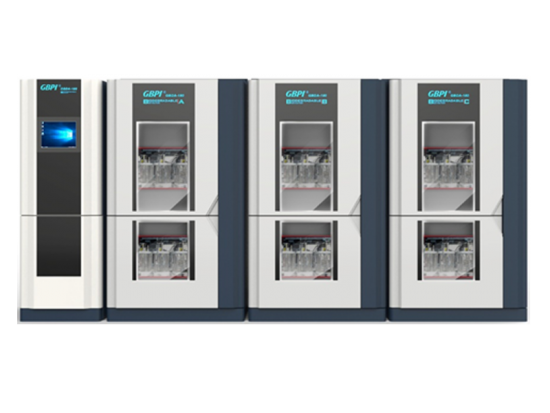
      AUTO ZF1800G Full-automatic Total Migration Tester Total Migration & Non-Volatile Residue Tester Need technical datasheet & quotation? Get free consultation now. Learn more details, parameters and application cases Click for Free Consultation Overview In pharmaceutical, food-packaging, chemical and water-quality laboratories worldwide, accurate determination of total migration and non-volatile residues has become an essential regulatory requirement. Manual evaporation-residue testing brings many pain points: lengthy workflows, heavy human intervention, unstable weighing repeatability, and high risks of human-caused errors. To resolve these bottlenecks, GBPI launches the AUTO ZF1800G Full‑automatic Total Migration Tester, an all‑in‑one laboratory instrument integrating water‑bath evaporation, heating drying, cooling and constant‑weight weighing. If you want to know detailed parameters, quotation and application cases, please visit: https://www.gbpitester.com/Full-automatic-Total-Migration-Tester-AUTO-ZF1800G_p196.html Test Principle The core test principle of AUTO ZF1800G follows mainstream global laboratory workflows. The auto‑feeding system transfers sample solution into solvent dishes. Empty evaporating dishes go through repeated heating, cooling and weighing cycles until reaching constant‑weight threshold. Samples are evaporated to dryness under water‑bath temperature below simulant boiling‑point. The inner chamber heats up to 105 °C for thorough drying, followed by controlled cooling. Built‑in high‑precision balances continuously monitor dish weight. Once preset constant‑weight deviation (0.3 mg, adjustable) is satisfied, the instrument automatically terminates the whole experiment without manual attendance. Compliance Standards Purified Water: Chinese Pharmacopoeia, EP9.0 WATER, PURIFIED Pharmaceutical Packaging: National Standard for Pharmaceutical Packaging Materials, non-volatile residue test for extractables Food Contact Materials: GB 31604.8-2016, EN 1186-3:2002 method A, Standards and Specifications for Utensils, Containers and Packages of Korea Ministry of Health and Welfare chapter IV 2-8 Cigarette Tipping Paper: YQ/T 59-2015 Chemical Reagents: GB/T 9740-2008, ISO 759 Water Quality: GB 8538-2016, DZT0064.9-2021, GB/T 14415-2007, GB/T 5750.4-2006 Solid Samples: ChP Volume IV (Extractables & Loss on Drying), USP40-NF35<921> WATER DETERMINATION Hardware & Core Advantages High Precision Balances & Anti-interference Design AUTO ZF1800G equips high‑resolution imported balances, housed inside water‑circulation interlayer protective covers to stabilize temperature‑humidity environment during weighing, avoiding ambient interference. High Throughput & Auto Feeding System It carries 18 independent sample stations for high‑throughput batch testing, each group generating separate raw data. The pneumatic‑driven auto‑feeding mechanism keeps residual liquid below 0.1 mL. Water Bath & Solvent Recovery Syst...
    View More
  • Meet GBPI at PACK EXPO International 2026: Booth W-48062, Chicago
    Meet GBPI at PACK EXPO International 2026: Booth W-48062, Chicago 2026-09-30
    Meet GBPI at PACK EXPO International 2026: Booth W-48062, Chicago Exhibition Preview  |  Guangzhou Biaoji Packaging Equipment Co., Ltd. You Are Invited Booth W-48062  West Building Date October 18 – 21, 2026 Venue McCormick Place, 2301 S. King Drive, Chicago, IL 60616 This October, the global packaging community will gather in Chicago, and GBPI is delighted to announce that we will be exhibiting at PACK EXPO International 2026. We warmly invite our customers, partners, laboratory managers, and packaging engineers to visit us at Booth W-48062 in the West Building for live demonstrations, technical conversations, and a first-hand look at the testing and sealing solutions we have been building for the flexible packaging industry. About PACK EXPO International PACK EXPO International, organized by PMMI, The Association for Packaging and Processing Technologies, is one of the most influential packaging and processing trade shows in North America. Held at Chicago’s McCormick Place, the show brings together thousands of attendees and exhibitors from around the world, covering food and beverage, pharmaceuticals, personal care, household goods, and many other sectors. What makes the event special is its breadth. Within a few days, visitors can walk from raw materials and films to filling lines, labeling systems, robotics, sustainability solutions, and quality-control instruments. For buyers, it is an efficient way to compare technologies side by side. For exhibitors, it is a rare chance to meet decision-makers from across the supply chain in person. That is exactly why GBPI has chosen this platform to present our latest instruments and equipment to the American market. What You Will See at Our Booth Our booth is themed around three ideas: industry applications, innovation, and networking. Our team will show how precise testing protects package quality from the lab bench to the shelf. The following products will be featured (click any product to view details): OTR TesterMeasures oxygen transmission rate through films, sheets, and containers, a key indicator of shelf life for food, pharmaceutical, and electronic packaging. Learn more → WVTR TesterDetermines water vapor transmission rate, helping you evaluate the moisture-barrier performance of your materials with reliable, repeatable data. Learn more → COF TesterTests the coefficient of friction of plastic films and sheets, which directly affects how smoothly packaging runs on high-speed filling lines. Learn more → Leakage TesterDetects leaks and seal integrity problems in bags, pouches, bottles, and other sealed packages before they reach the customer. Learn more → Tensile TesterEvaluates tensile strength, elongation, seal strength, and peel behavior of films, laminates, and finished packages. Learn more → Spout Sealing MachineAn automated solution for spout pouch production, designed for stable sealing quality and efficient throughput. Learn more → ...
    View More
  • How the EU's New Packaging Law Turns Compliance Into a Growth Engine
    How the EU's New Packaging Law Turns Compliance Into a Growth Engine 2026-08-18
    GB GBPI — Compliance Dossier gbpitester.com ↗   § Regulatory Briefing · PPWR 2026 How the EU's New Packaging Law Turns Compliance Into a Growth Engine The EU Packaging and Packaging Waste Regulation now governs a package's entire life — design, material, recycled content, and end‑of‑life — not just its disposal. Every new clause creates a new measurement problem. This dossier maps the regulation, article by article, onto the instrument lines built to solve it. SubjectEU PPWR × Packaging Test Instruments Prepared forGuangzhou Biaoji Packaging Equipment Co., Ltd. Referencewww.gbpitester.com ScopeDesign → Material → Recycled Content → End‑of‑Life       01 · Regulatory Shift From Waste Management to Lifecycle Engineering The EU's revised Packaging and Packaging Waste Regulation (PPWR) is arguably the most consequential piece of packaging legislation to take effect in over a decade. Unlike its predecessor directive, which primarily addressed how packaging waste is collected and disposed of at the end of its life, the PPWR regulates the entire lifecycle of packaging — from raw material selection and product design, through recycled content and biodegradability, to final disposal. For manufacturers, converters, and brand owners who export to or operate within the EU, this is no longer a back‑office recycling issue. It is now a front‑line design, R&D, and quality‑control requirement that touches every layer of the packaging supply chain. For GBPI, an instrument manufacturer built around barrier testing, physical property testing, and thermal / degradation analysis, this regulatory shift is not simply a compliance burden passed down to customers — it is a substantial commercial opportunity. Every clause of the PPWR that tightens a material specification creates a corresponding measurement problem, and measurement problems are what GBPI's product lines are built to solve.     02 · Article 9 Compostable Packaging Mandates & Biodegradation Testing Article 9 requires that certain defined packaging formats — tea bags, sticky produce labels, very lightweight plastic carrier bags — must be compostable under industrial composting conditions, meeting the EN 13432 standard (harmonized with ISO 14855). To claim conformity and obtain third‑party certification such as TÜV Austria "OK Compost" or DIN CERTCO, manufacturers need quantifiable data on disintegration rate, biodegradation percentage, and ecotoxicity of the resulting compost. This is where GBPI's Biodegradability Testing line, and specifically the GBDA‑180 Intelligent Compost Degradation Tester, becomes directly relevant. The instrument simulates controlled industrial composting conditions and tracks CO₂ evolution and mass loss over time — exactly the data set EN 13432 / ISO 14855 certification requires. As PLA, PBAT, PHA, and starch‑blend material producers scale...
    View More
  • Standards Empower Industry, Technology Drives Development | GBPI, as a Major Participant, Has Three National Standards Officially Released!
    Standards Empower Industry, Technology Drives Development | GBPI, as a Major Participant, Has Three National Standards Officially Released! 2026-08-11
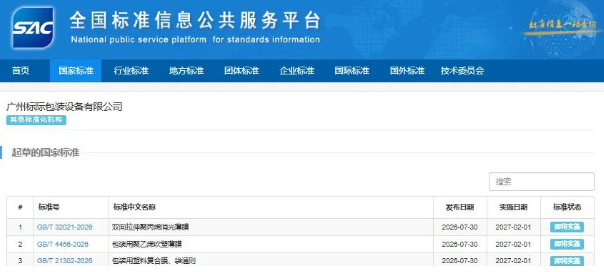
    Standards Empower Industry, Technology Drives Development | GBPI, as a Major Participant, Has Three National Standards Officially Released! GBPI Acts as Major Participant for Three Officially‑Released National Packaging Standards Address: No.3 Linjiang Road, Xiagang Subdistrict, Huangpu District, GuangzhouTel: +86 15820231129 | Official Website: www.gbpitester.com Good News As a major participating organization, GBPI has participated in the compilation of three officially‑released national standards. Recently, according to the national standard announcement issued by the State Administration for Market Regulation and the Standardization Administration of China, three national standards: GB/T 21302‑2026 General Principles for Plastic Composite Films and Pouches for Packaging, GB/T 4456‑2026 Polyethylene Blown Films for Packaging, and GB/T 32021‑2026 Biaxially Oriented Polypropylene Matte Films, have been officially published and will come into force on February 1, 2027. As a major drafting participant for these national standards, GBPI took part in full‑cycle standard seminars, inter‑laboratory test comparisons and verification of technical clauses. Massive measured test data was provided to support the implementation of standard provisions, which fully demonstrates GBPI’s leading position within the packaging inspection industry. The formulation of industrial standards relies heavily on testing technologies and laboratory instruments. GBPI’s in‑depth engagement in national standard development represents high‑level industry recognition for our technical accumulation, laboratory competence and instrument reliability. 01 Three Released National Standards GB/T 21302‑2026 General Principles for Plastic Composite Films and Pouches for Packaging GB/T 4456‑2026 Polyethylene Blown Films for Packaging GB/T 32021‑2026 Biaxially Oriented Polypropylene Matte Films The three standards cover mainstream thin‑film and composite products across the flexible packaging sector. Composite films and pouches represent the most widely‑adopted packaging format for food, pharmaceutical and daily‑chemical products. Polyethylene blown films are extensively used for heavy‑duty packaging and supermarket shopping bags. BOPP matte films serve high‑end food packaging and gift outer packaging scenarios. Based on current industrial realities, the updated standards revise technical specifications, test procedures and quality assessment rules. They unify industry‑wide technical specifications and resolve long‑standing market pain points including inconsistent product indexes and divergent testing approaches. They carry great guiding significance for regulating flexible‑packing market order, lifting overall quality of domestic plastic‑packaging goods and advancing high‑quality industrial growth. 02 Solid Technical Strength GBPI acts as a registered expert member of ISO/TC122 (International Organization for Standardization Technical Committee for Packaging), and committee ...
    View More
first page 1 2 3 4 5 6 7 8 9 10 last page

A total of 28 pages

Contact Us

Call Us : +86 15820231129

Email Us : info@gbtest.cn

Address : No. 3 Linjiang Road, Huangpu District, Guangzhou, China

Send A Message

Leave us a message, we will get back to you ASAP.

  • Facebook
  • Linkedin
  • Youtube
  • Twitter

Copyright @ 2026 Guangzhou Biaoji Packaging Equipment Co.,Ltd. All Rights Reserved.

Chat now

Inquiry Now

Home

Products

NEWS

contact