info@gbtest.cn


 en
en ru
ru es
es ar
ar

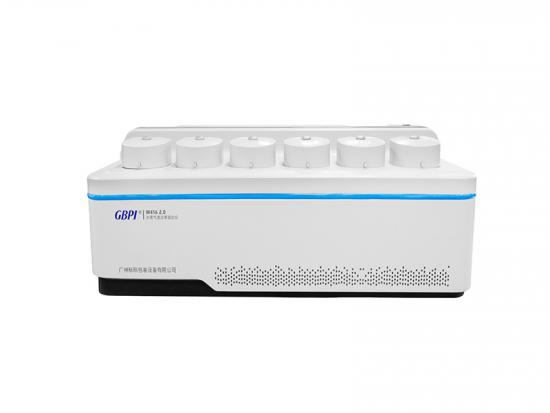
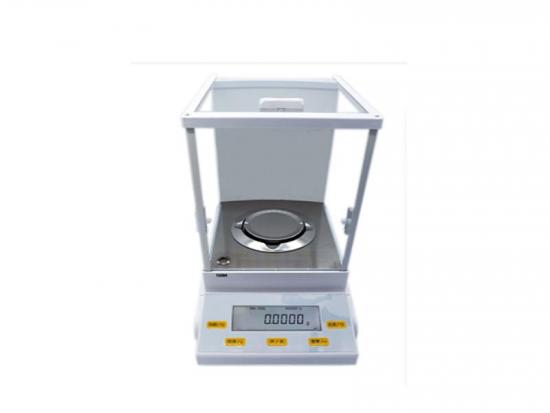
- Precision Weighing Instrument for Laboratory Analysis FA2004Analytical Balance: Precision Weighing Instrument for Laboratory Analysis Product Introduction This analytical balance is designed for precision measurement and analysis in industrial and mining enterprises, scientific research institutions, universities and laboratories. Technical Parameters Item Specifications Actual Readability 0.0001g Maximum Capacity 200g Repeatability Standard Deviation ≤±0.0001g Linearity ≤ ±0.0002g Calibration Weight Value 200g Calibration Type External Automatic Calibration Overall Dimension 365×223×338mm Packing Size 500×310×450mm Pan Size Φ90mm Effective Volume of Windshield 150×165×200mm Net Weight 5.5KG Gross Weight 7.5KG Product Features Large backlit LCD display with high-sensitivity touch keys for simple operation. Built-in underhook for density measurement, overload protection weighing pan. Airflow windshield under the pan to improve sealing and ensure reliable test data. Display protective cover for dust and scratch resistance, extending service life. Glass door transport lock, four-sided transparent glass windshield with aluminum alloy back plate. Omni-directional sensor protection, protecting the sensor from external force damage in six directions. Full aluminum base to suppress low-frequency vibration and stabilize the instrument body. Overload protection weighing pan with pan locking structure to prevent overload and protect sensor. Get QuotationView More
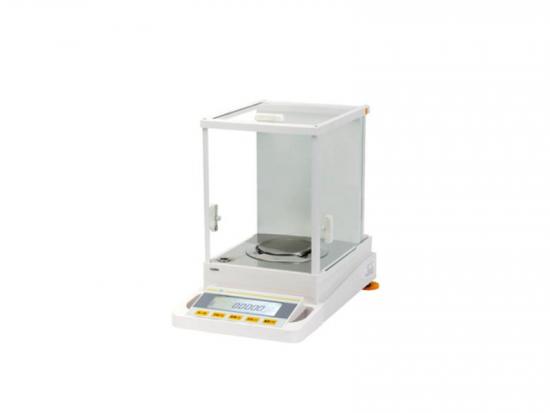
- Electronic Analytical Balance FA1004FA1004 Electronic Analytical Balance FA1004 High Precision Electronic Analytical Balance Product Introduction This product is used for precise weighing and analysis in laboratories and assay rooms of industrial and mining enterprises, scientific research institutions and universities. Get Quotation Technical Specifications Actual Division Value 0.0001g Maximum Weighing Range 100g Repeatability Standard Deviation ±0.0001g Linearity ≤ ±0.0002g Calibration Weight Value 100g Type External Automatic Calibration Balance Overall Dimension 365×223×338mm Packing Size 500×310×450mm Pan Size Φ90mm Effective Volume of Windshield 150×165×200mm Net Weight 5.5KG Gross Weight 7.5KG Product Features Oversized backlit LCD screen and high-sensitivity touch keys for simple operation. Built-in under-pan weighing hook and overload protection weighing pan. Airflow windshield installed under the weighing pan for higher tightness and more reliable test data. Display protective cover: provides extra dust-proof and scratch-resistant protection to extend balance service life. Equipped with glass door transport lock, four-sided fully transparent glass windshield and aluminum alloy back plate. Omni-directional sensor protection function to protect the sensor from external force damage in six directions to the maximum extent. All-aluminum balance base to resist low-frequency vibration and stabilize the machine body. Overload protection for weighing pan (adopts pan locking structure to prevent weighing overload and protect sensor).View More
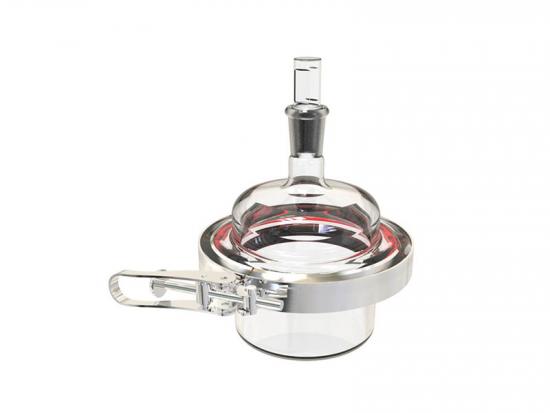
- Migration Test Cell-MC-DMC‑D Migration Test Cell: Professional Pre‑Treatment Solution for Food‑Contact Material Migration Test GBPI MC‑D Migration Test Cell for Food‑Contact Material Migration Pre‑Treatment Address: No.3 Linjiang Road, Xiagang Subdistrict, Huangpu District, GuangzhouTel: +86 15820231129 | Official Website: www.gbpitester.com Product Introduction MC‑D Migration Test Cell is suitable for pre‑treatment of migration tests for food‑contact materials and products. It meets the requirements of GB 5009.156‑2016 and applies to all non‑volatile food simulants specified in GB/T 23296.1‑2009, GB 31604.1‑2015 and other relevant standards. It provides standardized test conditions to support safety assessment for food‑contact specimens, widely adopted by third‑party laboratories, food packaging manufacturers and research institutes. Executive Standards To ensure test repeatability and global recognition, MC‑D Migration Test Cell conforms to both Chinese national standards and European normative requirements: GB/T 23296.1‑2009, EN13130‑1:2004, GB 5009.156‑2016, GB 31604.1‑2015, EN1186‑1:2002. It satisfies migration pre‑treatment requirements for domestic inspection and EU export certification. Core Technical Parameters Contact Mode Single‑sided contact Contact Area 99.17 cm² Contact Surface Diameter Φ112.4 mm Volume 300 mL Operating Temperature 5℃ ~ 120℃ Product Features • Designed and manufactured with reference to Type‑D cell in Appendix C of EN1186‑1:2002, Type‑D cell in Appendix D of GB/T 23296.1‑2009 and Type‑D cell in Appendix D of EN13130‑1:2004, ensuring consistency of migration test results. • This migration cell supports both migration‑cell method and total‑immersion method to meet diverse pre‑treatment requirements. • Constructed of premium borosilicate glass featuring high hardness, high light transmittance and excellent chemical stability. It is heat‑resistant with low matrix content and will not interfere with the determination of overall migration and specific migration values. • Adjustable stainless‑steel latches enable simple operation and reliable sealing. It prevents burst under high‑temperature conditions with various food simulants, guaranteeing test safety and stable migration results. • For non‑reflux immersion, the opening can be sealed and fixed directly with glass plug to carry out total‑immersion tests at ambient and high temperatures. • For reflux immersion, a condensation reflux tube can be directly connected to the ground‑glass joint for migration testing. Application Fields It applies to migration test pre‑treatment of food‑contact materials and products exposed to food simulants including water, acetic acid and ethanol. Conclusion MC‑D Migration Test Cell is a standard‑compliant auxiliary device for food‑contact material safety testing. Made of high‑performance borosilicate glass, it supports both migration‑cell and total‑immersion approaches, compatible with non‑reflux and reflux immersion workflows. With safe anti‑burst performance under high‑temperature testing, it delivers repeatable migration pre‑treatment results for lab QC, third‑party testing institutes and packaging manufacturers. It is essential hardware for food‑contact material compliance assessment both for domestic market and European export business. Get Quotation for This Unit GBPI Packaging Test Equipment ManufacturerAddress: No.3 Linjiang Road, Xiagang Subdistrict, Huangpu District, Guangzhou, Guangdong, ChinaTel: +86 15820231129 | Official Website: www.gbpitester.com
- overall migration test for plastic
- migration test in packaging
- migration testing in food packaging
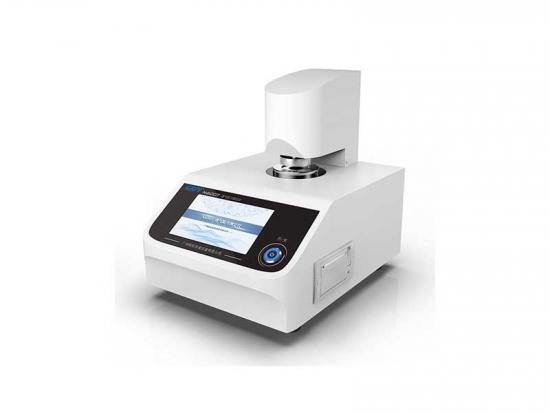
- Migration & Non-volatile-matter Content Tester
Tags :
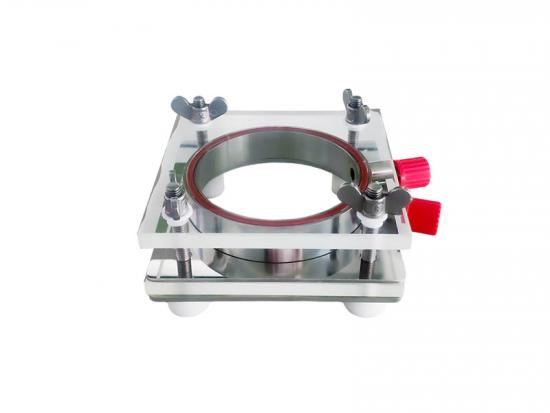
- Migration Test Cell-MC-CMC‑C Migration Test Cell: Professional Pre‑Treatment Solution for Food‑Contact Material Migration Test GBPI MC‑C Migration Test Cell for Food‑Contact Material Migration Pre‑Treatment Address: No.3 Linjiang Road, Xiagang Subdistrict, Huangpu District, GuangzhouTel: +86 15820231129 | Official Website: www.gbpitester.com Product Introduction MC‑C Migration Test Cell is suitable for pre‑treatment of migration tests for food‑contact materials and products. It meets the requirements of GB 5009.156‑2016 and applies to all non‑volatile food simulants specified in GB 31604.1‑2015, EN1186‑1 and other relevant standards. It provides standardized test conditions to support safety assessment for food‑contact specimens, widely adopted by third‑party laboratories, food packaging manufacturers and research institutes. Executive Standards To ensure test repeatability and global recognition, MC‑C Migration Test Cell conforms to both Chinese national standards and European normative requirements: GB 5009.156‑2016, GB 31604.1‑2015, GB/T 23296.1‑2009, EN1186‑1:2002, EN 13130‑1:2004. It satisfies migration pre‑treatment requirements for domestic inspection and EU export certification. Core Technical Parameters Contact Mode Single‑sided or Double‑sided contact Single‑sided Contact Area(Diameter) 51.5 cm² (Φ81 mm) Double‑sided Contact Area 103 cm² Volume 120 mL Operating Temperature 5℃~180℃ Overall Dimensions 143mm(L) × 125mm(W) × 76mm(H) Net Weight 1.2 kg Product Features • Complies with relevant standards, fully designed and manufactured according to Figure B.5 Migration Test Cell C in Appendix B of GB 5009.156‑2016 and Figure C.8 Migration Test Cell F in Appendix C of EN1186‑1:2002, ensuring consistency of migration test results. • Made of high‑quality stainless steel without trace substance precipitation. • Supports both single‑sided and double‑sided detection to reduce model‑selection trouble. Double‑sided contact is suitable for food‑contact materials such as instant‑noodle outer packaging and seasoning sachets. • Adopts high‑temperature resistant, corrosion‑resistant and self‑cleaning sealing ring to achieve excellent sealing performance, preventing leakage and volatilization of various simulants during testing. • Unique sealing structure ensures areas outside the test surface do not come into contact with food simulants, guaranteeing valid test area. • Suitable for migration test pre‑treatment of a wider range of materials. Application Fields It applies to migration test pre‑treatment of food‑contact materials and products exposed to food simulants including water, ethanol, acetic acid, vegetable oil, n‑hexane, n‑heptane and isooctane. Conclusion MC‑C Migration Test Cell is a standard‑compliant auxiliary device for food‑contact material safety testing. Supporting both single‑sided and double‑sided contact modes, it fits diverse packaging samples including instant‑noodle packages and seasoning bags. High‑quality stainless steel avoids trace substance release, and reliable sealing prevents simulant leakage and volatilization. It delivers repeatable migration pre‑treatment results for lab QC, third‑party testing institutes and packaging manufacturers. It is essential hardware for food‑contact material compliance assessment both for domestic market and European export business. Get Quotation for This Unit GBPI Packaging Test Equipment ManufacturerAddress: No.3 Linjiang Road, Xiagang Subdistrict, Huangpu District, Guangzhou, Guangdong, ChinaTel: +86 15820231129 | Official Website: www.gbpitester.comView More
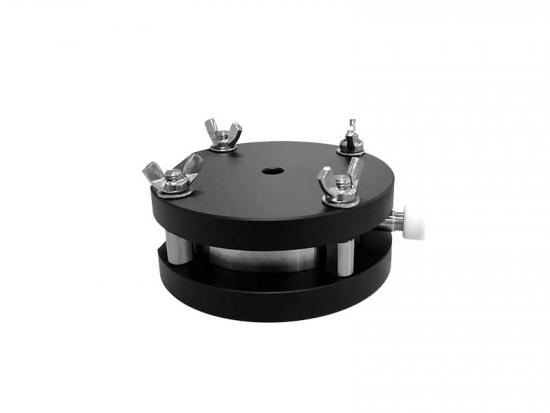
- Migration Test Cell-MC-C1MC‑C1 Migration Test Cell: Professional Pre‑Treatment Solution for Food‑Contact Material Migration Test GBPI MC‑C1 Migration Test Cell for Food‑Contact Material Migration Pre‑Treatment Address: No.3 Linjiang Road, Xiagang Subdistrict, Huangpu District, GuangzhouTel: +86 15820231129 | Official Website: www.gbpitester.com Product Introduction MC‑C1 Migration Test Cell is suitable for pre‑treatment of migration tests for food‑contact materials and products. It is applicable to all non‑volatile food simulants specified in GB 31604.1‑2015, EN1186‑1, EN13130‑1:2004 and other relevant standards. It provides standardized test conditions to support safety assessment for food‑contact flat specimens, widely adopted by third‑party laboratories, food packaging manufacturers and research institutes. Executive Standards To ensure test repeatability and global recognition, MC‑C1 Migration Test Cell conforms to both Chinese national standards and European normative requirements: GB 5009.156‑2016, GB 31604.1‑2015, GB/T 23296.1‑2009, EN1186‑1:2002, EN 13130‑1:2004. It satisfies migration pre‑treatment requirements for domestic inspection and EU export certification. Core Technical Parameters Contact Mode Single‑sided or Double‑sided contact Single‑sided Contact Area(Diameter) 100 cm² (Φ112.8 mm) Double‑sided Contact Area 200 cm² Volume 200 mL Operating Temperature 5℃~180℃ Overall Dimensions 175mm(L) × 140mm(W) × 63mm(H) Net Weight 2.3 kg Product Features • Complies with relevant standards, fully designed and manufactured according to Migration Cell C in Appendix C of EN1186‑1:2002 and Migration Test Cell C in Appendix D of EN13130‑1:2004, ensuring consistency of migration test results. • Supports both single‑sided and double‑sided detection to reduce model‑selection trouble. Double‑sided contact is suitable for food‑contact materials such as instant‑noodle outer packaging and seasoning sachets. • Adopts high‑temperature resistant, corrosion‑resistant and self‑cleaning sealing ring to achieve excellent sealing performance, preventing leakage and volatilization of various simulants during testing. • Unique sealing structure ensures areas outside the test surface do not come into contact with food simulants, guaranteeing valid test area. • Suitable for migration test pre‑treatment of a wider range of materials. Application Fields It applies to migration test pre‑treatment of sheet‑shaped food‑contact materials and products for single‑sided exposure to food simulants including water, ethanol, acetic acid, vegetable oil, n‑hexane, n‑heptane and isooctane. Conclusion MC‑C1 Migration Test Cell is a standard‑compliant auxiliary device for food‑contact material safety testing. Supporting both single‑sided and double‑sided contact modes, it fits diverse packaging samples including instant‑noodle packages and seasoning bags. Reliable sealing avoids simulant leakage and volatilization. It delivers repeatable migration pre‑treatment results for lab QC, third‑party testing institutes and packaging manufacturers. It is essential hardware for food‑contact material compliance assessment both for domestic market and European export business. Get Quotation for This Unit GBPI Packaging Test Equipment ManufacturerAddress: No.3 Linjiang Road, Xiagang Subdistrict, Huangpu District, Guangzhou, Guangdong, ChinaTel: +86 15820231129 | Official Website: www.gbpitester.comView More