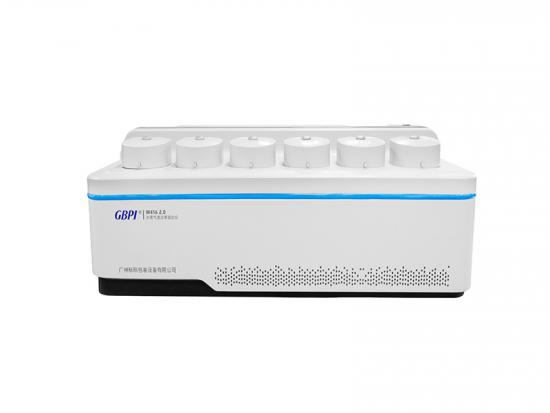
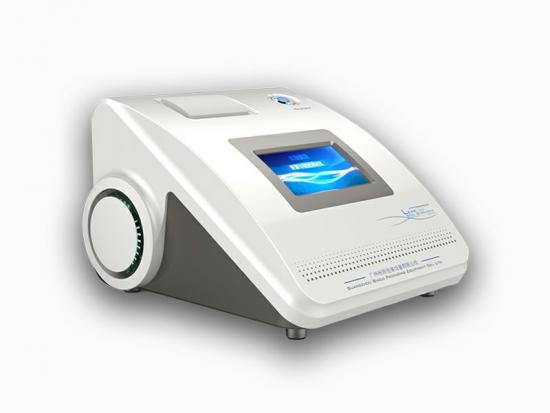
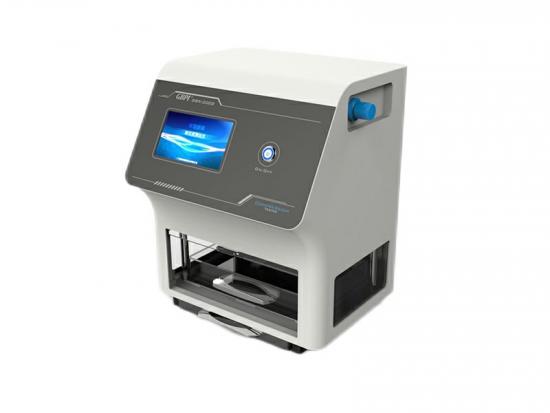
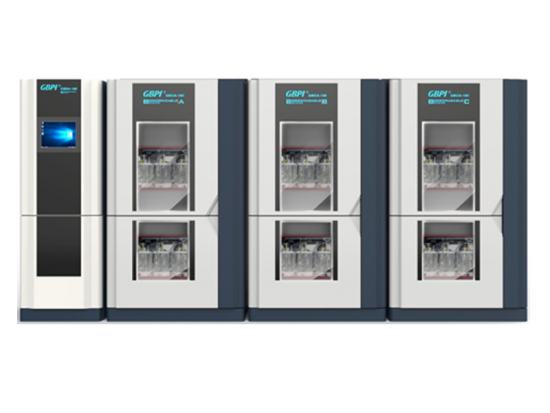
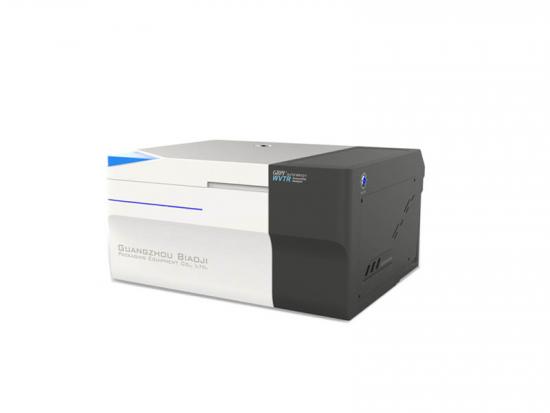
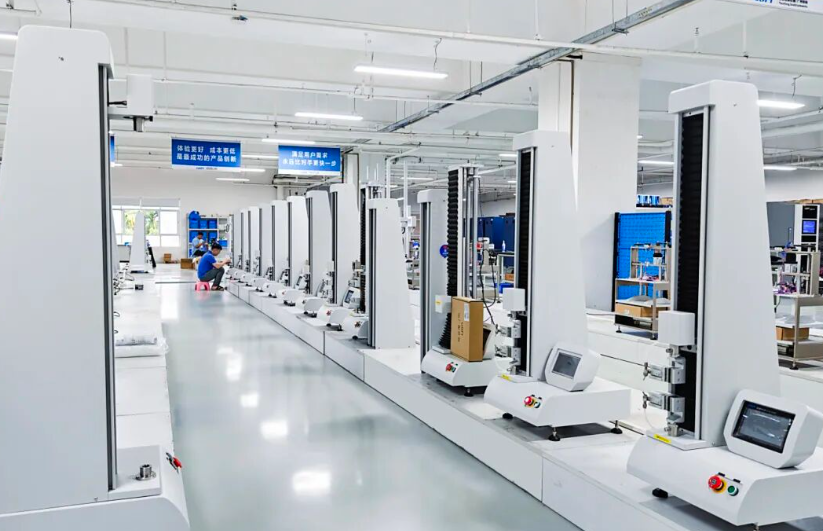
packaging testing equipment Water Vapor Permeation Tester
Product News
  • GBPI: Precision Permeability Testing Solutions for Global Rubber Market
    GBPI: Precision Permeability Testing Solutions for Global Rubber Market 2026-05-06
      GBPI: Precision Permeability Testing Solutions for Global Rubber Market Introduction: Quality Revolution & Core Status of Permeation Detection in Rubber Industry Rubber Industry Overview With the rapid development of the global rubber industry, rubber materials are widely applied in automotive tires, industrial seals, medical rubber products and consumer electronic accessories. Quality control of rubber materials has become the core focus of the manufacturing industry. Among all rubber performance indicators, gas barrier property (permeability) is undoubtedly the key parameter determining the service life and safety of rubber products. For tires, air tightness directly affects fuel efficiency and driving safety; for medical rubber parts, barrier performance is related to drug effectiveness; for food-contact rubber products, oxygen permeability determines shelf life. As a national-level, specialized and sophisticated "Little Giant" enterprise in China’s packaging testing instrument industry, GBPI has accumulated more than 20 years of technology experience. We provide a complete set of precise, reliable and international standard-compliant permeability testing solutions for the global rubber market. From tire giants in Southeast Asia to automotive component suppliers in Europe, GBPI instruments are guarding the quality of rubber products worldwide. Chapter 1 Permeability: The Invisible Guardian of Rubber Materials 1.1 Why Gas Permeability Is Critical for Rubber In material science, gas permeability refers to the volume of gas passing through a specimen of unit area and thickness within a certain time under unit pressure difference. This indicator is highly valued in the rubber industry for the following reasons: Tire Air Tightness: The inner liner of radial tires is usually made of halogenated butyl rubber, whose permeability is only about 1/10 of natural rubber. Excessive permeability will cause natural air loss within months, increasing rolling resistance and tire burst risk. Durability of Sealing Products: The performance of O-rings and gaskets relies on the interference fit between rubber and metal. Gas permeation will lead to attenuation of the sealing force. Medical Rubber Parts: Syringe pistons and infusion tubes are in direct contact with liquid medicine. Oxygen permeation may cause oxidation and deterioration of pharmaceuticals. Therefore, accurate determination of gas permeability of rubber is an essential step to ensure product quality and meet international specifications. 1.2 How GBPI Defines "Precise Permeability Testing." GBPI gas permeability tester series (N500, N530G, etc.) are specially designed for polymer materials such as rubber and plastic, adopting the differential pressure method: Working Principle: Place the treated rubber specimen between the upper and lower test chambers. Vacuumize the system and inject test gas (O₂, N₂, CO₂ or air) into the upper chamber to form a constant pressure difference on both si...
    View More
  • Accurately Safeguard
    Accurately Safeguard "Bottle" Safety! In-depth Analysis of Baby Bottle Safety Testing with Electronic Tensile Tester 2026-03-27
        Accurately Safeguard "Bottle" Safety! In-depth Analysis of Baby Bottle Safety Testing with Electronic Tensile Tester Every safe sip for your baby starts with the ultimate safety of products. Mechanical performance testing is a critical step in safeguarding safety during the production and quality inspection of infant baby bottles. The GBH-2 Electronic Tensile Tester from GBPI is equipped with a 0.5-class high-precision sensor (force accuracy ±0.5% FS), a 1-500mm/min stepless speed regulation system, and an intelligent data analysis platform. It fully complies with GB 38995-2020 "Baby Bottle Safety Standard", providing strict quality control for baby bottles from laboratories to production lines! 01 Mechanical Performance Test: Safety Retention Test Test Scene: Simulate the connection strength and safety of components when a baby grabs and shakes the baby bottle.Conducted in accordance with GB 38995-2020: The mechanical testing equipment fixes the baby bottle with a special fixture, simulates the tension and stress conditions of components in daily use (such as external force at 45° to the bottle axis), detects the safety retention performance of the nipple/drinking components connected to the bottle body, and verifies whether the components break or fall off during the test to ensure product safety. Customized three-jaw fixture for accurate fixing of bottle caps, straws and other components Accurate Positioning: Complies with standard requirements, stably clamps baby bottle components at (10±2) mm from the top to ensure uniform test positions. Non-destructive Clamping: The structure in contact with the baby bottle (such as gaskets and clamping surfaces) is designed to be soft, avoiding damage to vulnerable parts such as nipples and bottle bodies, and preventing test failure due to clamping damage. Stable Force Transmission: The metal main structure has high strength, firmly fixes the baby bottle during testing (loading tension and thrust) without slipping or deformation, ensuring the external force loading direction is consistent with the standard and stable force transmission. 02 Mechanical Performance Test: Flexibility Test Test Scene: The Electronic Tensile Tester is equipped with a 100mm×100mm polished steel plate. The assembled baby bottle sample is fixed by a fixture to ensure the main axis of the bottle is perpendicular to the steel plate, and the initial deviation of the nipple/drinking component from the main axis is allowed to be a maximum of 5°. The equipment applies a force of (10±1) N to the end of the component at a speed of (10±2) mm/min, and finally measures the distance from the locking ring (or bottle mouth if there is no locking ring) to the bending point of the component to verify compliance with ≤40mm, testing the flexibility of the component. Accurate Positioning: Adapts to the baby bottle structure, stably fixes the sample, ensures the main axis of the bottle is per...
    View More
  • Gas Barrier Property Testing of Separation Membranes
    Gas Barrier Property Testing of Separation Membranes 2025-11-28
    [Introduction] Separation membranes, as materials with special selective permeability, enable precise separation, purification, and concentration of substances at a molecular or microscopic particle level. They are widely used in numerous core sectors such as water treatment, food & beverage, pharmaceuticals, chemicals & petrochemicals, and energy. The stability of their performance directly determines the production efficiency and product quality in these related industries. Gas barrier property, being a core indicator for evaluating separation membrane performance, is crucial for ensuring separation purity and efficiency. The following sections provide a systematic analysis covering classification, test methods, core instruments, and actual test results.   ▍1. Classification of Separation Membranes   The separation capability of membranes stems from their "selective permeability." Different types of separation membranes achieve substance separation through different principles, and the gas barrier property directly affects the purity and efficiency of the separation process:   Microfiltration / Ultrafiltration Membranes: Rely on membrane pore size screening for solid-liquid or macromolecule separation (e.g., intercepting suspended solids in wastewater treatment, separating proteins in biopharmaceuticals). Insufficient gas barrier properties can lead to permeation of impurity gases, affecting product purity.   Reverse Osmosis / Nanofiltration Membranes: Rely on selective permeation under pressure driving force for desalination or small molecule separation (e.g., seawater desalination, drinking water softening). Poor gas barrier properties can reduce water flux and desalination rate.   Pervaporation Membranes (e.g., PVA membrane): Used for separating close-boiling mixtures like alcohol-water or organic-water mixtures. The gas barrier property directly determines separation selectivity – if the target gas permeates easily, separation efficiency can be significantly compromised.   Inorganic Ceramic Membranes (e.g., Alumina membrane): Suitable for separation under high-temperature and highly corrosive conditions (e.g., high-temperature fluid filtration in chemical industry). Their barrier property, along with mechanical strength, determines separation stability in harsh environments.   ▍2. Test Method   The performance indicators of separation membranes include separation efficiency, flux, barrier property, stability, and service life. Among these, barrier property testing is a key link in evaluating the comprehensive performance of separation membranes, directly determining their suitability and reliability in complex application scenarios. Referencing GB/T 1038.1-2022 "Plastics - Film and Sheeting - Determination of Gas Transmission Rate - Part 1: Differential-Pressure Method", the differential pressure method is adopted as the core testing method. This method quantifies the rate at which gas p...
    View More
  • Exploring the Importance of Film Shrinkage Testing: The GBK-D1 Heat Shrinkage Tester
    Exploring the Importance of Film Shrinkage Testing: The GBK-D1 Heat Shrinkage Tester 2024-11-14
    In the fast-evolving packaging industry, particularly for items like beverage labels, shrink wraps for bottles, sausage packaging, and even cigarette boxes, ensuring the optimal shrinkage performance of films is crucial. Films must shrink tightly around products to guarantee both protection and an appealing presentation. This is where precise and reliable film shrinkage testing comes into play. At the forefront of this testing technology is the GBK-D1 Film Shrinkage Performance Tester, designed by Guangzhou Biaoji Instrument. This advanced device provides manufacturers with the ability to accurately test and analyze various shrinkage parameters of packaging films. In this blog, we'll explore the importance of film shrinkage properties, how the GBK-D1 works, and why it’s an essential tool for today’s packaging industry. What Is Film Shrinkage Testing? Film shrinkage testing measures how a plastic film responds when exposed to heat. The process involves the material shrinking tightly around the product, creating a secure fit. This is essential in packaging industries where the film serves not only as a protective layer but also as an aesthetic feature. Films used for packaging are typically made from materials like polyethylene (PE), ethylene copolymers, and blends of these polymers. These materials are chosen for their excellent ability to shrink uniformly when heated. The testing process helps to ensure that the film performs consistently under various environmental conditions, which is key for the overall quality and functionality of the product packaging. Why Shrinkage Properties Matter Shrink films play a critical role in ensuring packaging integrity. Whether it's a beverage bottle label or a sausage wrap, the film must shrink to fit the contours of the product perfectly. If the film doesn't shrink properly, it can result in packaging defects such as wrinkles, loose wraps, or uneven seals. For example: Beverage Packaging: Shrink film ensures that labels conform to bottles without wrinkles, providing a sleek appearance. Food Packaging: Shrink films for sausages, for instance, need to form tightly around the product to preserve freshness and protect it from contaminants. Cosmetics and Pharmaceuticals: For sensitive products, shrink films must maintain a tight seal to protect the contents from damage or contamination. The GBK-D1: A Game-Changer in Film Shrinkage Testing Guangzhou Biaoji Instrument's GBK-D1 Film Shrinkage Performance Tester is a highly advanced tool that addresses the limitations of traditional testing methods, offering comprehensive insights into a film's shrinkage behavior. Here’s what sets it apart: Multi-Parameter Testing While traditional testing methods, like ovens or oil baths, typically measure only the shrinkage rate, the GBK-D1 takes a more detailed approach. It evaluates multiple parameters, such as: Shrinkage Force: Measures the force required for the film to shrink. Shrinkage Rate: Tracks how quickly...
    View More
  • The Application of Water Vapor Permeability Analyzer (WVPA) and Water Vapor Transmission Rate (WVTR) in the Rubber Industry
    The Application of Water Vapor Permeability Analyzer (WVPA) and Water Vapor Transmission Rate (WVTR) in the Rubber Industry 2024-11-06
    The Application of Water Vapor Permeability Analyzer (WVPA) and Water Vapor Transmission Rate (WVTR) in the Rubber Industry Introduction In the rubber industry, quality control and product performance are paramount. Rubber materials are used in various sectors like automotive, construction, and healthcare, where durability and environmental resistance are crucial. A key property affecting rubber’s performance is its Water Vapor Transmission Rate (WVTR)—the rate at which water vapor permeates through a material. Measuring WVTR helps manufacturers understand how well rubber materials resist moisture. To achieve this, the Water Vapor Permeability Analyzer (WVPA) becomes an essential tool. This article explores the significance of WVTR, the role of WVPA, and how these measurements benefit the rubber industry. Understanding Water Vapor Transmission Rate (WVTR) in Rubber WVTR is a measure of how much water vapor can pass through a material over a specific period. Rubber materials, though generally resistant to water vapor, have varying permeability rates based on their composition and intended use. For instance, tires, seals, and medical devices often require low WVTR to enhance durability and prevent degradation in moist environments. A high WVTR in rubber can lead to accelerated material degradation, especially in humid conditions. This can result in issues like cracking, hardening, or loss of elasticity, which compromise the material’s functionality. Therefore, understanding and controlling WVTR in rubber is essential for ensuring product longevity and reliability. The Role of Water Vapor Permeability Analyzer (WVPA) in Measuring WVTR A WVPA is a specialized instrument designed to accurately measure the WVTR of various materials, including rubber. In the rubber industry, WVPA is used to: Optimize Material Composition: By measuring the WVTR, manufacturers can modify rubber formulations to achieve desired levels of moisture resistance. For example, adding fillers like carbon black can decrease WVTR, making the material more resistant to moisture. The WVPA provides precise data on WVTR, helping manufacturers create materials tailored for specific applications. Quality Control: Regular WVTR testing ensures consistency across production batches. For industries where rubber products must meet stringent performance criteria—like automotive or medical sectors—consistent WVTR is critical. WVPA helps verify that all rubber products maintain the required WVTR values, ensuring high-quality output. Predict Product Lifespan: Understanding WVTR in rubber allows manufacturers to estimate how long a product will last under certain environmental conditions. A low WVTR is often associated with longer product lifespan, as reduced moisture absorption prevents early material degradation. Research and Development: In R&D, WVPA is essential for developing rubber materials with specific WVTR values. By experimenting with different additives...
    View More
first page 1 2 3 4 5 6 7 8 last page

A total of 8 pages

Contact Us

Call Us : +86 15820231129

Email Us : info@gbtest.cn

Address : No. 3 Linjiang Road, Huangpu District, Guangzhou, China

Send A Message

Leave us a message, we will get back to you ASAP.

  • Facebook
  • Linkedin
  • Youtube
  • Twitter

Copyright @ 2026 Guangzhou Biaoji Packaging Equipment Co.,Ltd. All Rights Reserved.

Chat now

Inquiry Now

Home

Products

NEWS

contact