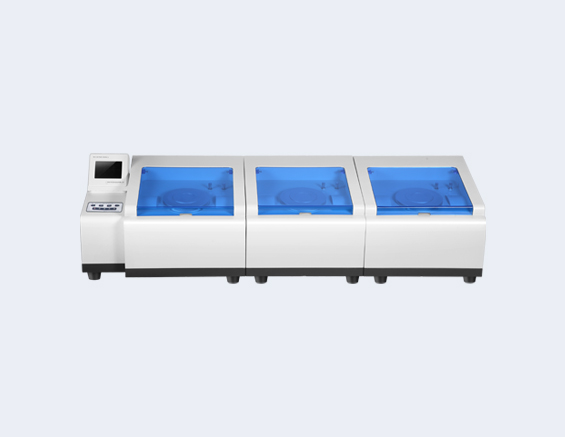
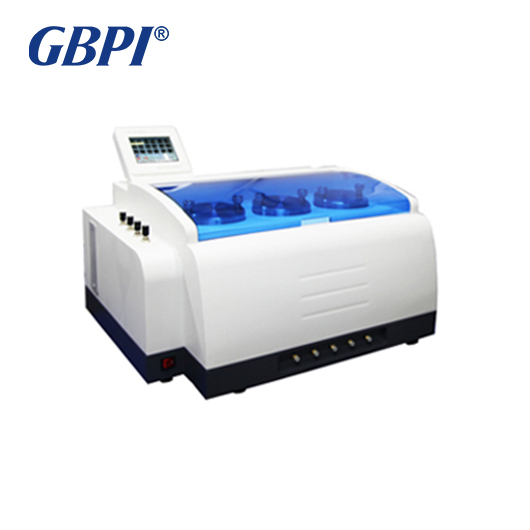
packaging testing equipment Water Vapor Permeation Tester
Industry News
  • How does a leak tester work
    How does a leak tester work 2020-08-14
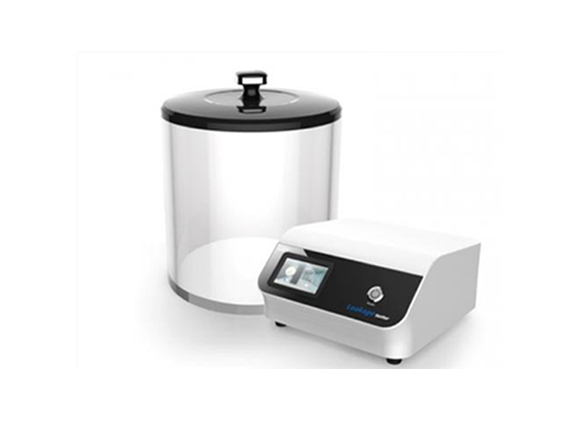
    Packaging testing is essential to ensure the integrity of the packaging development, machine setup and quality control process. How to quickly choose a suitable air tightness testing equipment has become a major problem that plagues enterprises. Guangzhou GBPI company will introduce to you the testing methods of the mainstream air tightness detectors on the market. Companies can choose the right instrument according to their needs. 1. Positive pressure detection The positive pressure method is to seal and inflate the tested equipment so that its internal pressure is higher than the external atmospheric pressure. Three methods can be used: pressure drop method judgment, water immersion detection and fixed-point detection. Judgment by pressure drop method: In the case of completely sealing all contact surfaces, inflate the product, observe the pressure change through the air tightness tester to determine the magnitude of the leakage, and then infer the leakage of the equipment, but not the leakage point Make clear positioning. Water immersion detection (bubble method detection): Inflate a certain clean gas into the equipment, when the pressure reaches the set value, immerse it in water, and judge the location and size of the leak by observing the air bubbles. It is suitable for immersing in the interior Product detection in the water can accurately determine the location of the leak. Differential pressure detection method: The compressed air (positive pressure) is accurately input into the tested product and the standard product at the same time, the inflation circuit is cut off, and the IK-ALT series air tightness detector is used to calculate, compare and analyze to obtain the tested product The pressure difference ΔP between the product and the standard product is used to determine whether the product is qualified. 2. Vacuum leak detection (negative pressure method) detection The negative pressure method is to vacuum when the equipment is sealed to make the internal pressure less than the external atmospheric pressure. Specific applications include vacuum attenuation method (dry inspection) and vacuum side leakage method (water inspection) Vacuum attenuation method: Under the condition of completely sealing all contact surfaces, directly or indirectly vacuumize the product, and analyze and read the pressure value ΔP3 through the IK-MF series air tightness detector to determine whether the product is qualified . Vacuum side leakage method: differential pressure leak test method and bubble leak test method, the product to be tested is put into the leak test box, and the vacuum is drawn on the box body to cause a pressure difference between the inside and outside of the test product. At this time, the following phenomena will occur: a) For flexible packaging and soft bottles: I. If the packaging bag bulges and remains unchanged, the packaging is intact; II. The packaging bag does not bulge or shrinks, indicating that the packaging leaks; III. The p...
    View More
  • How to measure the air permeability of textiles
    How to measure the air permeability of textiles 2020-07-28
        Air permeability is the ability of a fabric to allow moisture vapor to pass through. It plays a vital role in clothing and medical textiles.     Air permeability has nothing to do with air exchange. Rather, it is the ability of a fabric to allow moisture vapor to pass through.     Fabrics can achieve this in many different ways, and air exchange is only one possible way.     Compared with breathability, moisture vapor permeability (MVP) and moisture vapor transmission (MVT) may be better and more technical.     Neither ASTM nor the Textile Association defines air permeability, but both MVP and MVT are defined in the test standard.     According to EN 31092: 1993, water vapor permeability is "the characteristic of textile materials or composite materials, which depends on the water vapor resistance and temperature. Water vapor permeability is expressed in pascals per square meter hour.     According to BS 3546:2001, water vapor permeability is "the ability of a coated fabric to transmit water vapor to a specified level while maintaining high permeability".     According to the definition in the standard EN 31092: 1993, the water vapor permeability index is the ratio of thermal resistance to water vapor resistance.     According to BS 3546:2001, "The difference in water vapor pressure between the two surfaces of a material divided by the evaporation heat flux per unit area in the gradient direction" can be regarded as the "opposite" of water vapor resistance and air permeability.     Water vapor will transfer from the high concentration (pressure) area to the low concentration area by diffusion. Unobstructed, this can happen easily.     However, barriers like fabric will slow down the rate at which this happens. It is important to remember that steam pressure drives water vapor: humidity is not the key factor.     Modern waterproof and breathable fabrics can be divided into three different types, each of which works slightly differently. The breathability and waterproofness of the fabric is not entirely accurate, because the holes in the fabric structure are large enough to allow     water vapor to pass through, but too small to allow water droplets to pass through     The fabric air permeability tester is a professional and commonly used instrument for measuring air permeability.     GBPI can provide fabric air permeability tester and Water vapor transmission rate tester and oxygen transmission tester for a long time. Welcome to inquire.
    View More
  • How is oxygen permeability measured?
    How is oxygen permeability measured? 2020-07-22
        The oxygen transmission rate test system is suitable for plastic films, high barrier materials, solar backplanes, sheets, composite materials, aluminized films, co-extruded films, aluminum foil, sheet materials and plastics, rubber, paper, and glass Oxygen transmission rate test for packaging containers such as bottles, bags, cans, boxes, etc., made of metal and other materials.     There are two methods for testing oxygen transmission rate: equal pressure method and differential pressure method:     In the isobaric test environment, the pre-processed sample is clamped between the test chambers, oxygen or air flows on one side of the film, high-purity nitrogen flows on the other side of the film, and oxygen molecules diffuse through the film to In the high-purity nitrogen on the other side, the flowing nitrogen is carried to the sensor. By analyzing the oxygen concentration measured by the sensor, parameters such as oxygen transmission rate can be calculated; for packaging containers, the high-purity nitrogen is The inside of the container flows, and the air or high purity oxygen surrounds the outside of the container.     In the differential pressure method environment, oxygen will move from the high pressure side to the low pressure side The oxygen flow rate is large, the transmission rate will increase     The GBPI oxygen transmission rate test can be easily installed by the user; the practical built-in operating program reduces operating errors, the prompt screen can remind the operator to input accurately, the safety protection system avoids the sensor damage and does not need to adjust the flow rate. GBPI is a manufacturer specializing in the production of oxygen permeability meters, gas permeability meters, moisture permeability meters, oxygen transmission rate testers, and other packaging testing instruments.
    View More
  • What is the difference between the vapor transmission rate of different materials
    What is the difference between the vapor transmission rate of different materials 2020-07-17
        The water vapor transmission permeability of a polyethylene bottle refers to the amount of water vapor transmission through a sample within a certain time under a specified temperature, relative humidity, and a certain water vapor pressure difference.     The amount of water vapor transmission  permeability of a solid bottle at a specified temperature, relative humidity, and a certain water vapor pressure difference.     The water vapor transmission permeability  of the liquid bottle is within the specified temperature and relative humidity environment, and the percentage of water loss in the bottle within a certain period of time.     The water vapor permeability measurement methods are: cup method, electrolytic analysis method,Weight method.     The water vapor transmission rate of polyethylene bottles actually includes the two meanings of water vapor transmission  permeability and water vapor transmission coefficient. The meanings expressed by these two meanings also have certain differences, but they can be used to represent water vapor transmission. Ability to grow materials.     The water vapor transmission permeability indicates the weight of water vapor transmission material under a certain time, under certain temperature and humidity conditions. The water vapor transmission rate is the standard value of the water vapor transmission rate converted by the coefficient, and corresponds to the standard unit,     Used for comparison between different test results.     GBPI's star products are: precise laboratory instruments such as water vapor transmission rate tester, oxygen transmission rate tester, gas transmission rate tester, etc. More industry knowledge of transmission rate test instruments will be updated next time, more For more details, please pay attention to our official website.
    View More
  • What does water Vapour permeable mean
    What does water Vapour permeable mean 2020-07-15
    vapor permeation refers to the phenomenon that water vapor molecules penetrate and diffuse from the side with high partial pressure to the side with low partial pressure when the partial pressure difference of water vapor exists on both sides of the envelope. The amount of steam penetration is directly proportional to the breathability of the material of the envelope structure and the difference in partial pressure of steam on both sides, and inversely proportional to the thickness of the structure. vapor permeation is a new gas-phase dehydration membrane separation process. It is based on steam feed. Under the impetus of the partial pressure difference of each component in the mixture, the use of each component in the membrane to dissolve and expand the difference in performance to achieve The mixture separates. The application of vapor permeation technology in the separation of near boiling point, constant boiling point and isomers has its unique advantages, and it can also be coupled with biological and chemical reactions. The continuous removal of the reaction products has significantly improved the conversion rate of the reaction. Its technical and economic advantages are obvious, and it has broad application prospects in industrial fields such as petrochemicals, medicine, food, and environmental protection. GBPI's main products are: water vapor transmission rate tester, oxygen transmission rate tester, gas transmission rate tester, mask detection tester, nozzle bag sealing machine, electronic tension machine etc. If you need to know more product details, please click below to consult.
    View More
first page 1 2 3 4 5 last page

A total of 5 pages

Contact Us

Call Us : +86 15820231129

Email Us : info@gbtest.cn

Address : No. 3 Linjiang Road, Huangpu District, Guangzhou, China

Send A Message

Leave us a message, we will get back to you ASAP.

  • Facebook
  • Linkedin
  • Youtube
  • Twitter

Copyright @ 2026 Guangzhou Biaoji Packaging Equipment Co.,Ltd. All Rights Reserved.

Chat now

Inquiry Now

Home

Products

NEWS

contact