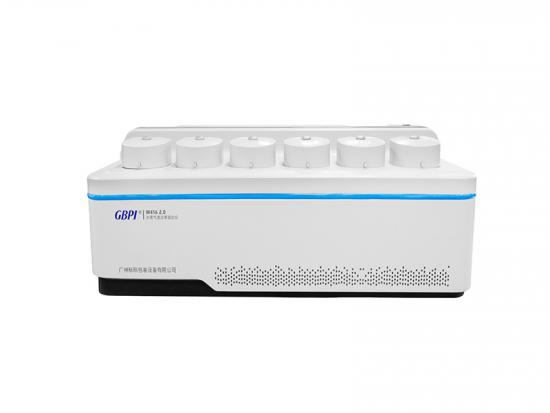
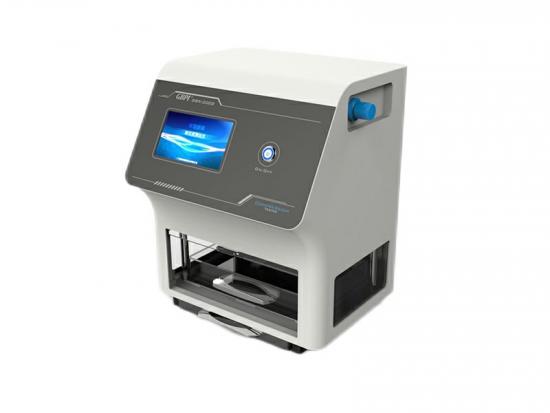
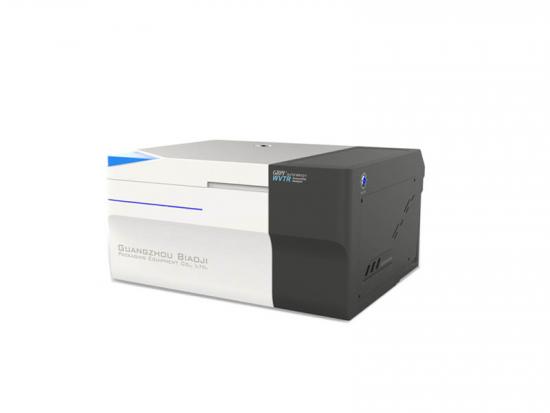
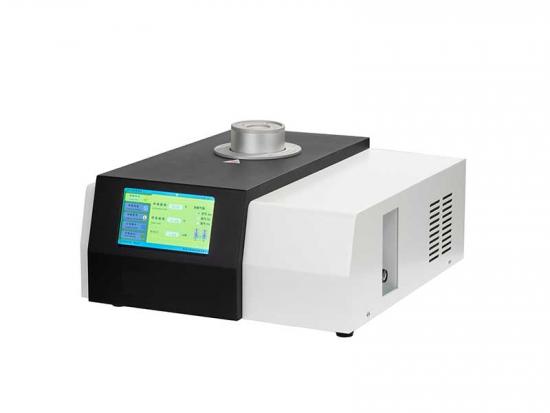
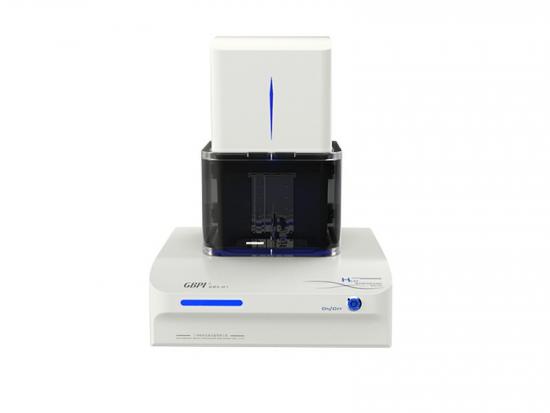
packaging testing equipment Water Vapor Permeation Tester
Products
Home /

Flexible Packaging Testing Service

/

Testing Items

/

residual solvent test

/Flexographic Printing Residual Solvents in Packaging Materials

Flexographic Printing Residual Solvents in Packaging Materials

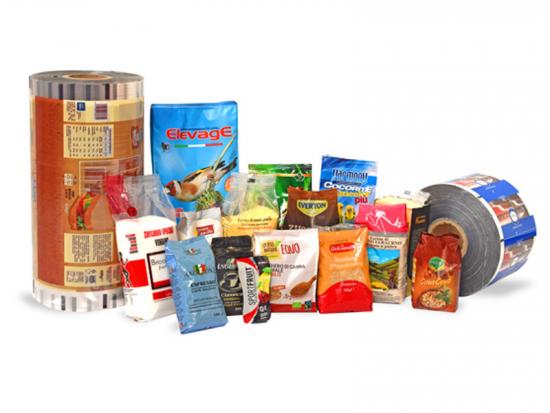
The identification and quantitation of residual printing solvents in synthetic packaging materials are very important for the material packaging suppliers, the printers and the packaging users of food and pharmaceutical products.

  • Brand:

    GBPI
  • Item NO.:

    GC9802 Gas Chromatog
  • Product Origin:

    Guangzhou China
  • Shipping Port:

    Huangpu Guangzhou
Inquiry now
Product Detail

Almost all foodstuffs consumed today are supplied encased in some form of packaging. By forming a barrier between the food and the environment, packaging materials maintain product quality and safety during shipping and storage. Packaging also protects the food from other packaging materials that may have desirable physical properties but are notorious sources of contamination, like recycled paperboard The types of packaging range from a simple, thin coating of foodgrade wax to complex multi-layered systems that combine paper, plastic and metallic components with adhesives.


However important the packaging is to maintaining the food quality and shelf-life, packaging materials are also a well-known source of contamination when they leach undesirable compounds into the food they are intended to protect. These compounds can be toxins and pose significant health hazards. The etiology of the contamination reveals that the manufacturing process used to make the package materials, adhesives that hold multi-layer packaging together, and the varnishes, inks and dyes applied to the finished package can all be sources of leachables or extractables that end up in the food. Solvents derived from these sources are a major contamination class and are of primary concern to food analysts.


GBPI Design and Manufacture Gas Chromatography GC9802 for our flexible pacakging material factory to help them improve their printing laminating film residual solvents testing.


GC9802 Gas Chromatography Application


To test the smell and solvent residues of printed packaging materials; test the quality and purity of the solvent.


GC9802  solvent residues testing Working principle


Sample of gas, liquid or solid is processed and passes through vaporizing chamber, brought to chromatographic column separation system. Carried by nitrogen, the sample mixture passes and contacts the chromatographic column, and the composition components of the mixture are separated by chromatographic column. Then every separated component is brought to the detector system, and transformed by the detector to equivalent electronic signal, which is collected and recorded as data, so as to make qualitative and quantitative analysis of the components of the sample mixture.


We GBPI not only supply Gas Chromatography Machine but also supply Solvent Residues Testing service in our CNAS Laboratory.Wecome customers to send us samples to testing your printing film residual solvents!
Send A Message

Leave us a message, we will get back to you ASAP.

Related Products
water vapor permeability test Water Vapor Permeability Analyzer Weight Increase Method W501
water vapor permeability analyzer is to test the water vapor transmission rate (WVTR) of films or sheets materials.
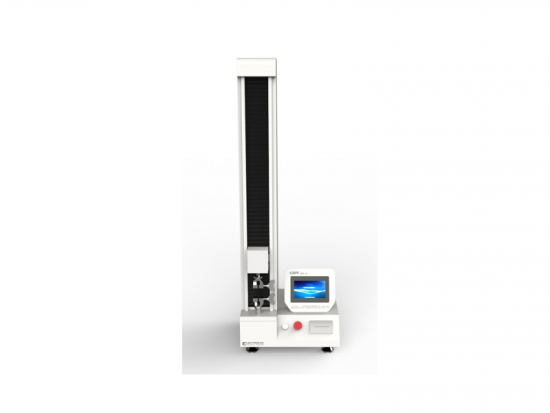
Electronic Tensile Tester Electronic Digital Tensile Tester Machine GBL-H
The popular single-guidance electronic tensile testing machine GBL-H is a mechanical property testing machine developed and manufactured by the Guangzhou Biaoji R&D team based on GB, JIS, ASTM and other standard requirements and market demands. The instrument adopts high-precision sensors, and the force measurement accuracy is within ±1 %FS; professional software support, fully automatic operation, equipped with liquid crystal display screen, real-time display of test curve data and query test report, convenient and fast testing; Choose built-in or external, with perfect limit protection, overload protection, emergency stop and other safety protection functions.
Aluminum Foil Testing Machine GNP-1 Aluminum foil bursting strength tester
Application GNP-1 Bursting Strength Tester can measure the bursting strength of single-layer or multi-layer paper, and can be used to test the blasting strength of cloth, leather, paper board, thin metal sheet, etc. Use mark transmission pressure, automatically retain the maximum bursting strength value when bursting, decomposition degree is 100 times higher than the needle type.
water vapor transimission rate WVTR MVTR water vapor permeability analyzer electrolytic sensor method for flexible barrier sheet materials test - W201
Water vapor permeability analyzer is used to test water vapor transmission rate (WVTR) of films or sheets materials for flexible packaging.
Moisture vapor transmission rate GBPI WVTR Moisture Vapor Transmission Rate Tester
This product is designed and manufactured based on the electrolytic method principle, in accordance with standards such as GB/T 21529 and ISO 15106-3. It is used to test the Moisture Vapor Transmission Rate (WVTR) of samples under controlled temperature and humidity conditions. Ideal for testing the water vapor permeability of films, sheets, papers, packaging, and various materials in industries such as food, pharmaceuticals, medical devices, daily chemicals, and photovoltaic electronics, it serves as an essential offline or online instrument for packaging manufacturers to evaluate the barrier performance of packaging materials.
Tear Tester GBD-S Tear Tester Paper Film Property ASTM Standard
GBD-S Tear Tester test the tear resistance of paper, film, non-woven fabrics and so on.
Salt Spray Tester Salt spray test chamber GB-OSH-60
  1. FunFunction Salt spray test chamber is used for the quality inspection and corrosion resistance test of a variety of materials, including metal plating, metal, electronic components, chemical coatings, paint, automobiles, motorcycles, metal ware, screws, springs, magnetic materials, organic and inorganic coating, anodizing, anti-rust oil industry etc. after the surface treatment.   1. ecGTechnical parameters   1. MODEL GB-OSH-60 2. Temperature inside chamber 35℃±1℃/ 50℃±1℃ 3. Temperature of pressure barrel 47℃±1℃/ 63℃±1℃  4. Inner size W600 x H400 x D450mm   5. External size W1080 x H1080 x D650mm 6. Temperature Uniformity ≤±2℃ 7. Uniformity Fluctuation ≤±0.5℃ 8. Salt fog settlement 1~2ml/h.80cm2 9. Compressed air pressure 1.00±0.01kgf/cm² 10. Spray mode Continuous or intermittent spray optional 11. Power supply AC  220V   50Hz   1.5KW a)  Temp. range: RT+10℃ ~ 55℃ (temperature up to 50C, thickening PVC or PP material is recommended ) b) Humid. range: ≥93%R.H c) Controller time shown: 9.9s~9990hrs d) Timer: 0~9999hrs. e) Testing method: Neutral salt spray test (NSS test), acetic acid salt spray test (AASS test), salt spray test (SS test), copper accelerated acetic acid salt spray test method for salt spray test (CASS test) and so on; (For CASS test, we recommend the PP material chamber with high temperature resistance) f) Specimen holder: It can meet the tilt test at 15 ℃ ~ 30 ℃ (two layers); g) Air compressor: V-0.013/12.5(Customer provided); discharge pressure:1.25M; flow amount: 0.13m3/min   1. MMMaterial of machine body a) Salt spray chamber adopts the quality PVC reinforced hard plastic plate, the surface is smooth and anti-aging, anti-corrosion; b) Without any FRP material produced on the surface because of discoloration fibrosis. Plastic structure of the chamber is better to meet strong acid salt spray test under long-term without any damage. c) Cover is imported transparent impact-resistant plate which is convenient to test specimen when test, that can cover and the box with a water seal to prevent leakage of salt spray.   2. AccAccording to CSN, JIS, ASTM standards, can be set to constant temperature control: (a) Brine spray test: NSS (neutral); · Temp. inside chamber: 35 ℃ ± 1 ℃ · Pressure air bucket: 47 ℃ ± 1 ℃ (b) Corrosion resistance test: CASS (copper acceleration), AASS (acid) · Temp. inside chamber: 50 ° C ± 1 ° C · Pressure air bucket: 63 ℃ ± 1 ℃   3. Watwatering system. It adopts the auto watering system, supply water when lack of water. 4. HeaHeating system Test temperature inside the cabinets is heated humidification water jacket, the heater adopts advanced titanium protective tube, built-in nickel-chromium alloy infrared heater core. Heating up fast, uniform temperature distribution; and saves about one half of the power compared to FRP tank jacketed heating. 5. ExeExecutive standard GB/T 2423.17 Basic test procedures for electric and electronic products Ka"- salt spray test methods; GB/T 10125 Corrosion tests in artificial atmospheres – salt spray tests; ASTM B368 Test Method for Copper-Accelerated Acetic Acid-Salt Spray (Fog) Testing (CASS Test); JIS Z2371-2000 Methods of salt spray testing etc. ISO 9227 Corrosion tests in artificial atmospheres (Note: 2 collection device is required, bigger models than ZH-SH-90 (270L) is required; In some versions, it specifies over 400liters is necessary)  ASTM B117-18 Standard Practice for Operating Salt Spray (Fog) Apparatus (Note: 2 collection device is required, bigger models than ZH-SH-90 is required )  
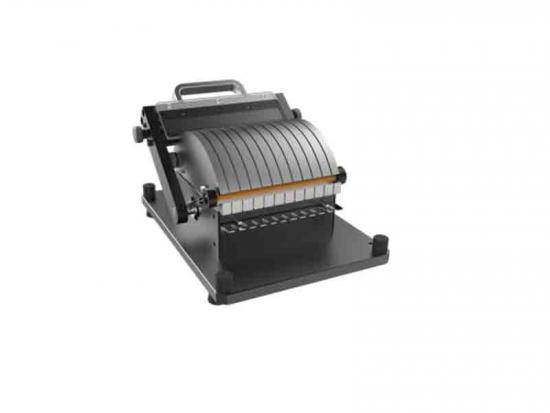
Hot Tack Test Instrument GBR Hot Tack Tester For Sticking Strength of Packaging Films
GBR hot tack tester is to test the sticking strength of packaging films after heat sealed with different temperature, pressure and time. To test the sticking strength of packaging films after heat sealed with different temperature, pressure and time. It simulates the use of packaging bag and makes impact experiment on the part of hot tack. 
Ozone Aging Test Chamber Ozone Aging Test Chamber (Dynamic Stretching) GB-OCY-150M
1 Function Ozone in the atmosphere is very little, while it’s a major factor in rubber cracking, the product simulate and enhance atmospheric ozone condition to study the role of ozone on the rubber, and to rapid identificate and evaluate rubber resistance for ozone aging and anti-ozone agent protection. According to“GB / T7762-2003 Test Method for Static Tensile Test of Ozone Resistance Cured Rubber or Thermoplastic Rubber”,“GB / T2951.21-2008 General Test Method for Insulation and Sheathing Material of Cable”,“GB / T 11206-2009 Rubber Aging test surface cracking method”, and other relevant standards of the test method. 2.1 Structure  All-in-one machine 2.2 Material a) Inner chamber: SUS304 stainless steel plate b) External chamber: SUS304 stainless steel plate or baking finish. Insulation: rigid polyurethane foam + aluminum insulation cotton with double protection. 2.3 Machine door a) Single door, open from left. b) Window frame / door frame with two silicone rubber seal and anti-condensation heating device. c)With observation window (W220xH250mm), lights above the window and door.  2.4 Requirements for sample holder (for dynamic-type only)       a)At both ends of the sample to be fixed with a clamp under the required elongation, the longitudinal direction of the specimen shall be substantially parallel to the direction of air flow when in contact with ozonized air. b) Clamps shall be made of a material (eg aluminum) which does not readily decompose ozone. c) Allow the sample to rotate at a speed between (20 ^ -25) mm / s, in a plane perpendicular to the dry gas flow, with each sample moving continuously along the same path. d) The time of one revolution of the same specimen is (8 ^ -12) min. The scanning area of the specimen shall be at least 40% of the effective area of the test chamber. Specimen preparation shall conform to the provisions of GB / T 9865.1. The test specimen is preferably cut from the new test piece and, if desired, may be cut from the finished product. At least 3 specimens shall be required for per test condition. The standard length of the specimen is not less than 10mm, and thickness not less than 0.2mm. The length of specimen between the two ends of the clamp before drawing is not less than 40mm. 3 Control panel a) Controller display b) Power switch c) Fault alarm d)Wavelength switch e)light switch button 4 Enclosure configuration a) With a stainless steel SUS # 304 shelf turntable b) One φ50mm lead hole:, and with a hole cover and silicone rubber plug. c) Move casters 4 pcs d) Horizontal mounting brackets 4 pcs e) There is a drainage hole in the back of the machine to facilitate the drainage of condensate; (8mm in diameter) Three-phase five-wire cable (four-core cable + protective grounding wire) 1 pc, (three meters long).
6 GBB-R1 Melt Flow Indexer (MFI)
Introduction It is used to determine the MFR & MVR value of the melt flow rate through the standard die every 10 minutes when various plastics and gums pass through a certain temperature and load in a viscous flow state. It is suitable for melting high temperature polycarbonate, polysulfoxide, fluorine plastics, nylon and other engineering plastics. Also, it is appropriate for the polyformaldehyde, polystrene, polypropylene, ABS resin polyformaldehyde, polycarbonate resin and other low temperature plastic melting test. The machine is widely used in plastic production, plastic products, petrochemical and other industries as well as related universities, scientific research units and commodity inspection departments. 
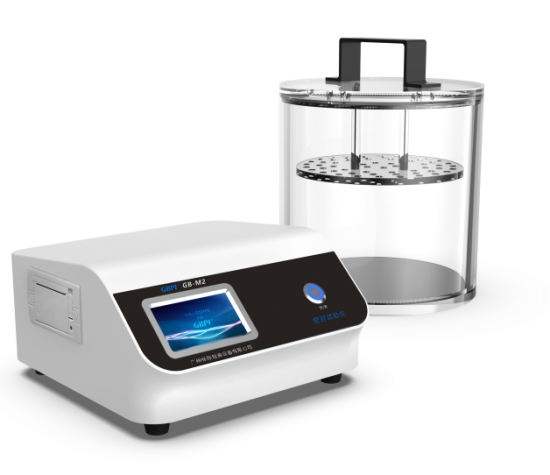
1 GBPI ASTM D 3078 hermetic sealing quality test electronic leakage tester GB-M1
GBPI Electronic Leakage Tester Application: To test the hermetic sealing quality and performance of packaging bags, bottles, cans and so on, used in industries of food, beverage, pharmaceuticals, personal care and so on.
water vapor transmission rate WVTR MVTR water vapor transimission rate testing instrument for plastic packaging properties test -
Three test chambers water vapor permeability analyzer using infrared sensor is the highest accurate water vapor transmission rate tester, meeting standard of ASTM F1249.
  • Facebook
  • Linkedin
  • Youtube
  • Twitter

Copyright @ 2026 Guangzhou Biaoji Packaging Equipment Co.,Ltd. All Rights Reserved.

Chat now

Inquiry Now

Home

Products

NEWS

contact